It is the question most owners ask before accepting a first shoot: how many people will be in my space. The answer varies widely from one project to the next, and it can be planned for. Here are the orders of magnitude by type of production, the roles you will meet, and what it asks of your location.
What determines the size of a crew
There is no single number. A crew’s size depends on four main factors:
- The type of production. A filmed interview and a feature film have little in common.
- The number of scenes and performers. Every person on camera adds staff around them.
- The length of the shoot. A project spread over several days mobilizes a larger and more stable crew.
- The level of finish. Lighting, sound, and styling change how many technicians are needed.
How many people by type of project
The ranges below are orders of magnitude commonly seen in the Canadian industry. They are meant to give you a sense of scale, not to predict a specific project.
- Corporate video or interview: three to six people, often a small camera and sound team.
- Commercial: several dozen people, across the technical crew, production, and performers.
- Television series: a substantial crew, often thirty to sixty people, organized by department.
- Feature film: the heaviest production, with full departments and a large staff.
The same location can host a discreet four-person shoot one month and a full crew the next. That is why your conditions matter more than the headcount.
Who does what on site
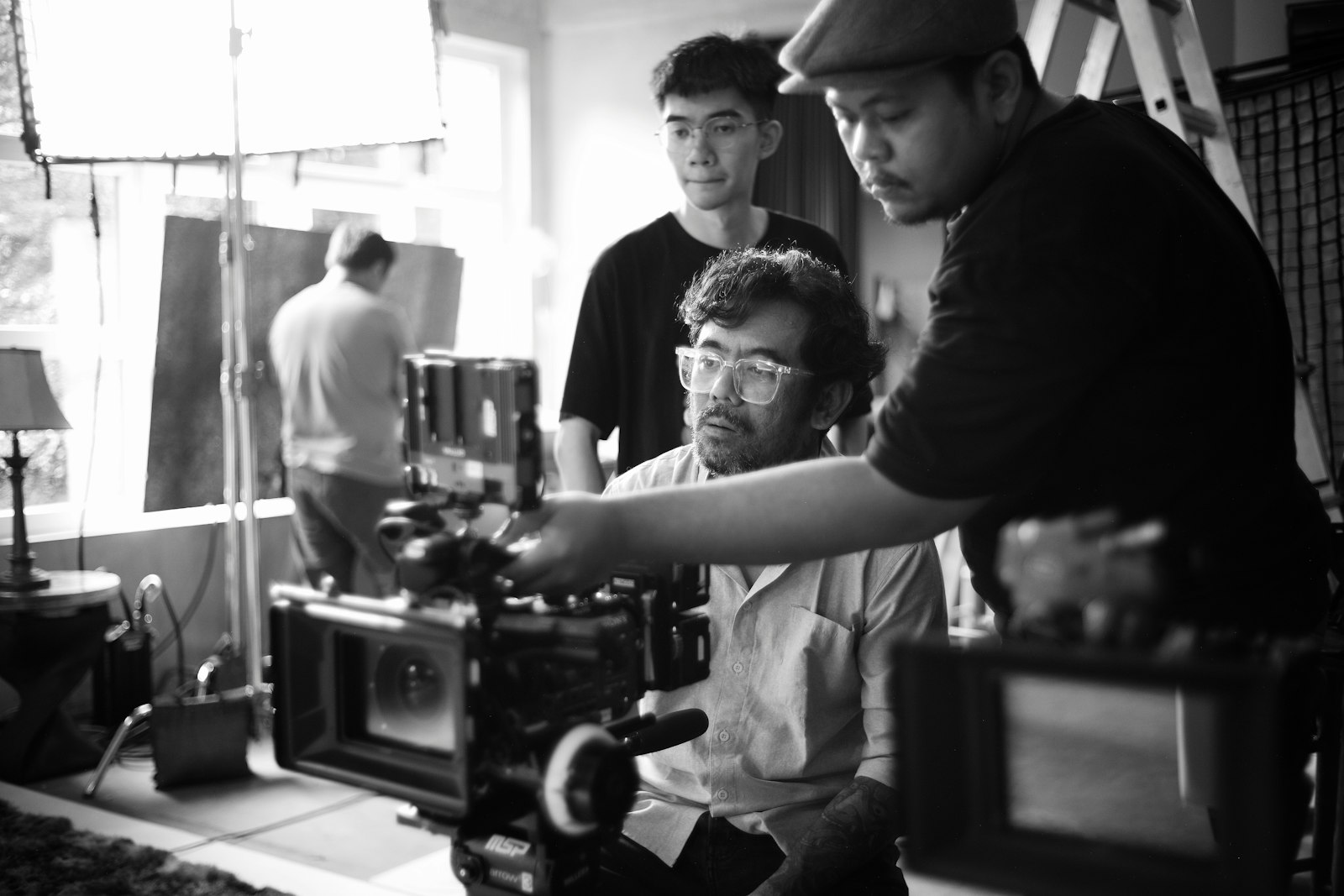
On a set, everyone has a defined role. Here are the positions you are likely to meet:
- The location manager. Your main point of contact on the shoot day, in charge of access, schedules, and respect for the space.
- The director and the director of photography. The people responsible for the content and the image.
- The camera team. Operator, assistants, and sometimes a dedicated equipment crew.
- Lighting and grip. The people who install lights, protections, and supports.
- Sound. One or two people depending on the complexity of the scenes.
- Styling, makeup, and background performers. Variable from project to project.
- Production. Logistics, meals, and overall coordination.
You do not have to manage this organization. The production handles it, and the location manager remains your point of contact.
Vehicles and footprint on site
A large crew brings equipment, and equipment arrives by vehicle. Depending on the project, plan for space for vans, a trailer, or a production truck. Two needs come up almost every time: clear access to the entrance and a space for equipment and crew breaks, known as the basecamp.
These points are settled in advance, not on the morning of the shoot. If your street is narrow or parking is limited, say so in the first conversation.
Staying in control of your space
A large shoot does not mean an uncontrolled one. Several markers protect you:
- Define the zones. You specify what is accessible and what stays private.
- Set your rules. Shoes, pets, fragile objects, closed rooms: all of it is stated in advance.
- Decide on your presence. You can stay on site or hand over access for the day.
- Frame the booking. A signed contract precedes every shoot and sets out each party’s responsibilities. You approve each project and set your own conditions.
- Ask for the right guarantees. You can require proof of the production’s liability insurance and a security deposit.
An important reminder: Locloc does not provide, include, or arrange insurance. Your own home insurance remains your primary coverage, and since most home policies exclude commercial activity, it is worth checking with your insurer before your first shoot.
How to prepare in practice
Before accepting, ask the production three simple questions: how many people will be on site, how many vehicles are planned, and which rooms will be used. Those answers are enough to prepare your space and adjust your conditions. To go further, read what productions look for in a location and browse filming locations in Toronto to see where your space fits in the market.
Your property can host a shoot, whatever the size of the project. List your property on the waitlist for free and set your own conditions.